
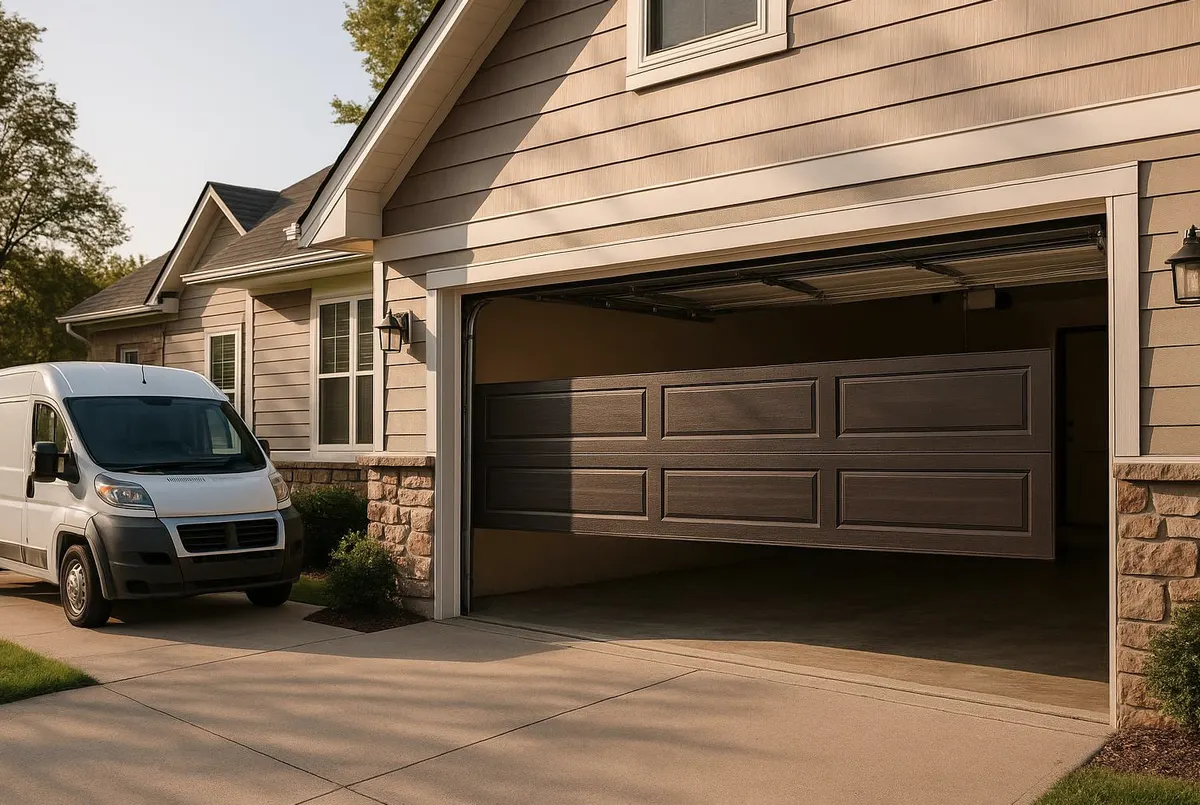
The Mistake: Trusting the Sensors Too Much
Most parents make the same assumption the first time a toddler darts under a closing garage door: the door will just stop, because that's what it's supposed to do. It's an easy assumption to make. Modern openers do have photo-eye sensors and auto-reverse mechanisms, and most of the time they work exactly as designed. That reliability is exactly why people stop paying close attention. Kids learn the wall button is fun to press. Pets nap in the shade of the garage opening. Nobody treats a garage door with the same caution as a pool or a stove, because it doesn't look dangerous.
But a garage door is the largest moving object in most homes, and the hardware that moves it — torsion springs under extreme tension, steel panels, rollers, cables — doesn't forgive a bad day. Sensors can be knocked out of alignment, caked with dust, or simply not installed on an older unit. When that happens, the only thing standing between a child or pet and a serious injury is whether the door actually detects them in time.
What Actually Goes Wrong
The injuries that send families to the ER aren't exotic. They follow a few predictable patterns:
- Pinch and crush points between panel sections. Fingers get caught in the horizontal seams of a sectional door as it closes, especially on raised-panel steel doors common in this area. A door that's slightly warped from humidity swelling can pinch even harder because the sections no longer meet evenly.
- Failure of the auto-reverse safety feature. If the photo-eye sensors are misaligned, dirty, or blocked by stored items in the garage, the door won't reverse when something crosses its path. Humidity and condensation in Florida garages are a common cause of sensor lenses fogging or drifting out of alignment over time.
- Pets trapped under a closing door. Dogs and cats don't register danger the way adults do. A pet that darts in right as the door starts closing can be struck or pinned if the sensor beam is set too high to catch something low to the ground.
- Garage door remotes and keypads left within reach of young children. A remote that lives on the kitchen counter or in a diaper bag often ends up in small hands, and kids don't understand that pressing the button while someone is underneath is dangerous.
- Off-track or unbalanced doors falling unexpectedly. A door that's jumped its track, or one with a spring that's lost tension, can drop suddenly instead of closing on schedule, even with no obstruction detected.
The Specific Actions That Prevent It
None of this requires replacing your whole system. It requires a short monthly habit and a few fixed rules in the house.
- Run the auto-reverse test monthly. Lay a roll of paper towels or a 2x4 flat on the ground under the open door, then close it. The door should reverse the instant it touches the object. If it doesn't, stop using the opener until the sensors or force settings are corrected.
- Test the photo-eye beam. Close the door and wave a broom handle through the beam near the floor. The door should stop and reverse. If it doesn't respond, check that both sensor lenses are clean and pointed directly at each other — a common issue after a humid stretch or heavy rain.
- Keep remotes and keypads out of reach. Store wall-mounted openers at least five feet up, and treat garage remotes like car keys, not toys. Set keypad codes that aren't shared with kids.
- Establish a no-play zone. The door track and the floor area directly beneath the door should be off-limits for games, bikes, and pet beds. This matters more than it sounds like it should — most close-call incidents happen because someone was standing exactly where they shouldn't have been.
- Watch for signs of panel or track damage. Dents, rust at the hinges, or a door that looks slightly crooked when closing are warning signs worth acting on before they become a pinch hazard or a fall risk.
- Never let children or pets near the door while it's cycling, even with sensors working. Sensors are a backup, not a substitute for supervision.
When to Call Astatula Overhead Door Co
If your auto-reverse test fails, your sensors won't hold alignment, or your door looks uneven when it closes, that's not a wait-and-see problem. Our Garage Door Maintenance & Tune-Up service checks sensor alignment, spring tension, and panel condition in one visit, which is the fastest way to know exactly what's putting your family at risk. If a panel is bent or a door has come off its track — both common after years of humidity swelling and heavy use — our Off Track Door Repair and panel services get the door moving safely and evenly again instead of masking the symptom.
If you're in Astatula, Tavares, Mount Dora, Eustis, or anywhere else around Lake County and something about your garage door doesn't feel right, don't wait for it to fail in front of your kids or pets. Call Astatula Overhead Door Co and we'll come take a look.